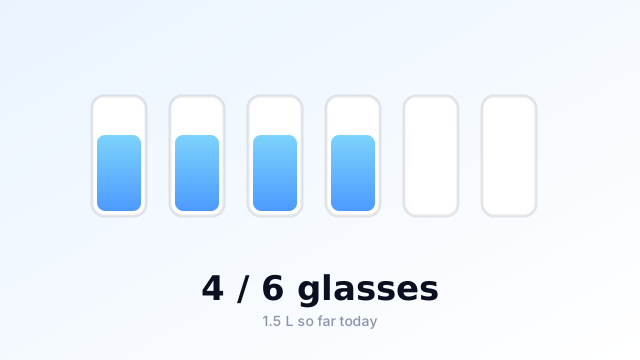
The eight-glasses rule is one of the most repeated pieces of health advice in the world, and nobody can point to the study behind it. The trail leads back to a 1945 recommendation that suggested about 2.5 litres of fluid a day — and included the sentence, usually left out, that most of this quantity is contained in prepared foods.
What the guidance actually says
Modern reference values put total daily fluid at roughly 2–2.5 litres for adult women and 2.5–3.5 litres for adult men. Two details change everything about how that number should be read:
- It is total fluid, not plain water. Tea, coffee, milk, soup and juice all count.
- Roughly 20–30% arrives in food. Fruit, vegetables, yoghurt and soup carry a surprising amount.
So the practical drinking target for most people sits closer to 1.5–2.5 litres, and it moves with the day.
What genuinely changes your need
| Factor | Effect |
|---|---|
| Heat and humidity | Large. Sweat losses can double or triple intake needs. |
| Exercise | Large. Roughly 0.4–0.8 L per hour of hard training, highly individual. |
| Body size | Moderate. Bigger bodies need more. |
| Salt and protein in the diet | Moderate. Both increase water needed for excretion. |
| Pregnancy and breastfeeding | Moderate to large. Needs rise; ask your doctor. |
| Air travel, illness, fever | Moderate. Losses go up quietly. |
The check that beats every formula
Pale straw urine, a few times a day, and rarely feeling thirsty. That is what adequate hydration looks like. Dark and infrequent means drink more; completely clear all day usually means you can relax.
Can you drink too much?
Yes, though it is rare. Drinking very large volumes quickly can dilute blood sodium — hyponatraemia — which is dangerous. It shows up mostly in endurance events where people drink far beyond thirst for hours. For everyday life, thirst plus urine colour is a safe guide.
One nuance: thirst becomes a less reliable signal with age, which is why older adults are often advised to drink on a schedule rather than waiting to feel thirsty.
Habits that work better than a target
- Anchor drinking to things you already do. A glass with every coffee, one before each meal, one when you sit down at your desk.
- Keep it visible. A bottle on the desk gets drunk; a glass in the kitchen does not.
- Front-load the day. Most people underdrink before lunch and then try to catch up in the evening, which mostly costs them sleep.
- Drink to thirst around training, and a little extra when it is hot.

Kiva's note
If you only change one thing: a glass of water before each meal. It is the easiest habit to keep and it quietly covers most of the gap.
Does drinking more water help you lose weight?
Modestly, and indirectly. Water before meals can slightly reduce how much people eat, and swapping sugary drinks for water removes calories without any sense of restriction. Water itself does not burn fat, and no amount of it compensates for the rest of the diet.
Frequently asked questions
Is eight glasses of water a day correct?
It is a rough slogan rather than a scientific finding. General guidance puts total daily fluid at roughly 2–2.5 litres for women and 2.5–3.5 litres for men, and that total includes water in food, tea, coffee and other drinks.
Does tea or coffee count towards fluid intake?
Yes. At normal intakes their mild diuretic effect does not cancel out the fluid they provide, so they count towards your daily total.
How do I know if I am drinking enough?
Pale straw-coloured urine and rarely feeling thirsty are the practical signs. Consistently dark, strong-smelling urine suggests you need more. Some medicines and vitamins change urine colour, so use the trend, not one reading.
Keep reading
How much sleep do you actually need?
The honest answer to the 8-hour question, why sleep debt compounds, and what to fix first.
How much protein do you actually need?
Grams per kilo, not percentages — and why how you spread protein across the day matters more than the exact daily total.
Read how we select sources, prepare bilingual content, verify calculations and handle corrections in our editorial policy. Professional medical review is present only when explicitly stated.